
Thick, heavy glasses can dig into your nose and leave marks on your face by the end of the day. If you have a strong prescription, you already know the feeling. Your lenses may appear noticeably thick, and that magnified eye look in photos gets old fast.
High-index lenses use a material that bends light more efficiently, so your prescription needs less material to correct your vision, creating a more comfortable lens profile. That means less bulk on your face and a more natural look, no matter how strong your prescription is.
What High-Index Lenses Really Mean For Your Eyes
The science behind this comes down to one number: a lens’s refractive index.
Every lens has a refractive index, a measure of how much it bends light to help focus light properly. Standard plastic lenses have a lower refractive index, so they need more curve and thickness to correct your vision.
High-index lenses use denser material that bends light more efficiently. That lets them do the same job with less material. If you have a strong prescription, you’ll notice the difference right away, both on your face and in the mirror.
Who Benefits Most From High-Index Lenses
Consider high-index lenses if you have a stronger prescription (approximately ±4.00 or higher). At that strength, standard materials tend to leave you with noticeably thick lenses. Nearsighted prescriptions tend to make lenses thicker at the edges, while farsighted prescriptions add thickness in the center. Either way, high-index lenses trim down that bulk.
If you have astigmatism, high-index lenses can still provide clear vision while helping keep your lenses thinner and more comfortable.
Common Index Numbers To Know
A higher index number generally means a thinner lens for the same prescription strength. Here’s how the common options stack up:
- 1.60 high-index lenses: A moderate reduction in thickness, well-suited for mild to moderate prescriptions.
- 1.67 high-index lenses: A noticeable reduction in thickness for stronger prescriptions.
- 1.74 high-index lenses: The thinnest option available for very strong prescriptions.
Why Choose High-Index Lenses Over Regular Ones
A thinner lens opens up frame choices you might have ruled out before. Smaller, trendier frames that once looked bulky with your prescription can now sit comfortably on your face.
Weight matters too. Lighter lenses mean less pressure on your nose and ears, and you’ll feel that difference if you wear glasses most of the day.
High-index lenses also cut down on the magnification effect that makes eyes look larger or smaller than they really are. Your photos and video calls can better reflect your natural look.
Cost and Durability Factors
High-index lenses typically cost more than standard plastic lenses. The material and manufacturing process account for that difference. It’s a fair trade for many people, but worth knowing upfront.
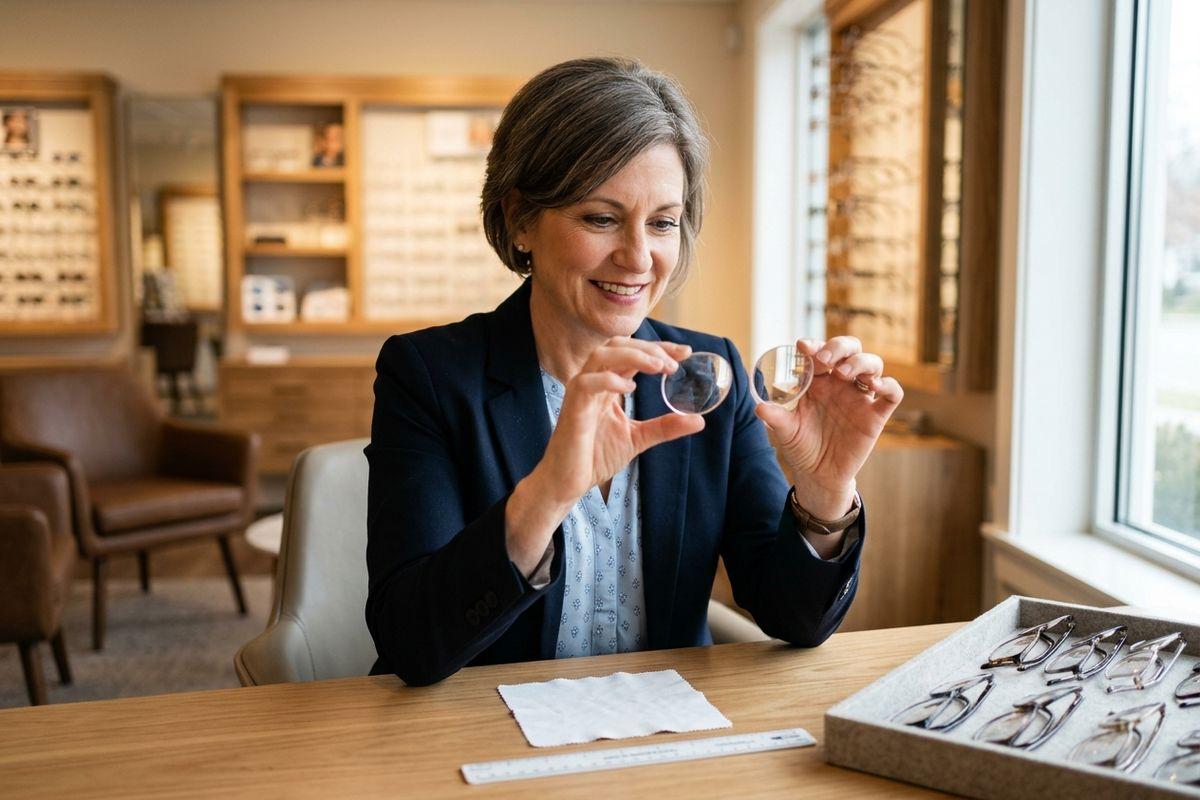
Polycarbonate lenses offer greater impact resistance, making them a better choice for sports and active lifestyles, while high-index lenses prioritize thinner, lighter optics.
High-Index vs Polycarbonate Lenses
Polycarbonate lenses hold up better if you play sports or work in conditions where impact resistance matters. They resist cracks and scratches from daily wear and tear better than high-index materials.
Pick high-index lenses when style and thinness are your top priorities. If you’re looking for thinner, lighter, and more attractive lenses that complement your frame choice, high-index lenses are an excellent option.
Find the Right Fit
Choosing a lens material only gets you partway there. Book a personal fitting to make sure your frame and lens combination fit comfortably throughout the day.
Ask your optician about premium lens coatings, including anti-reflective, scratch-resistant, and UV-protective coatings. These coatings reduce glare, improve durability, and help protect your eyes while complementing the clarity of high-index lenses.
Ready to Lighten the Load?
While high-index lenses are an excellent choice for stronger prescriptions, they’re just one of the many premium lens options available at Weston Optical. We offer lenses from trusted manufacturers, including Essilor, ZEISS, Hoya, Shamir, and Nikon Lenswear, along with options such as progressive lenses, photochromic lenses, digital lenses, and polarized sunglasses.
Our opticians can help you compare these options and recommend the best lenses for your prescription, lifestyle, and everyday vision needs.
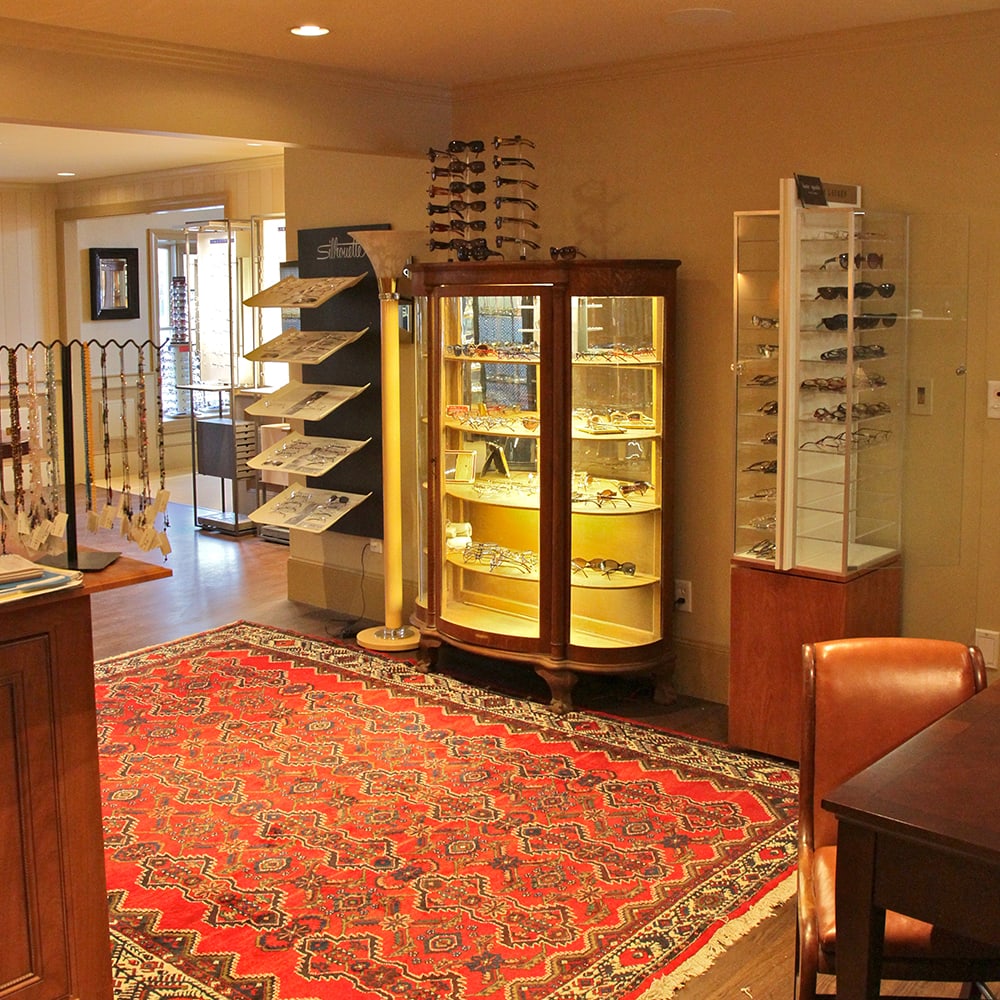
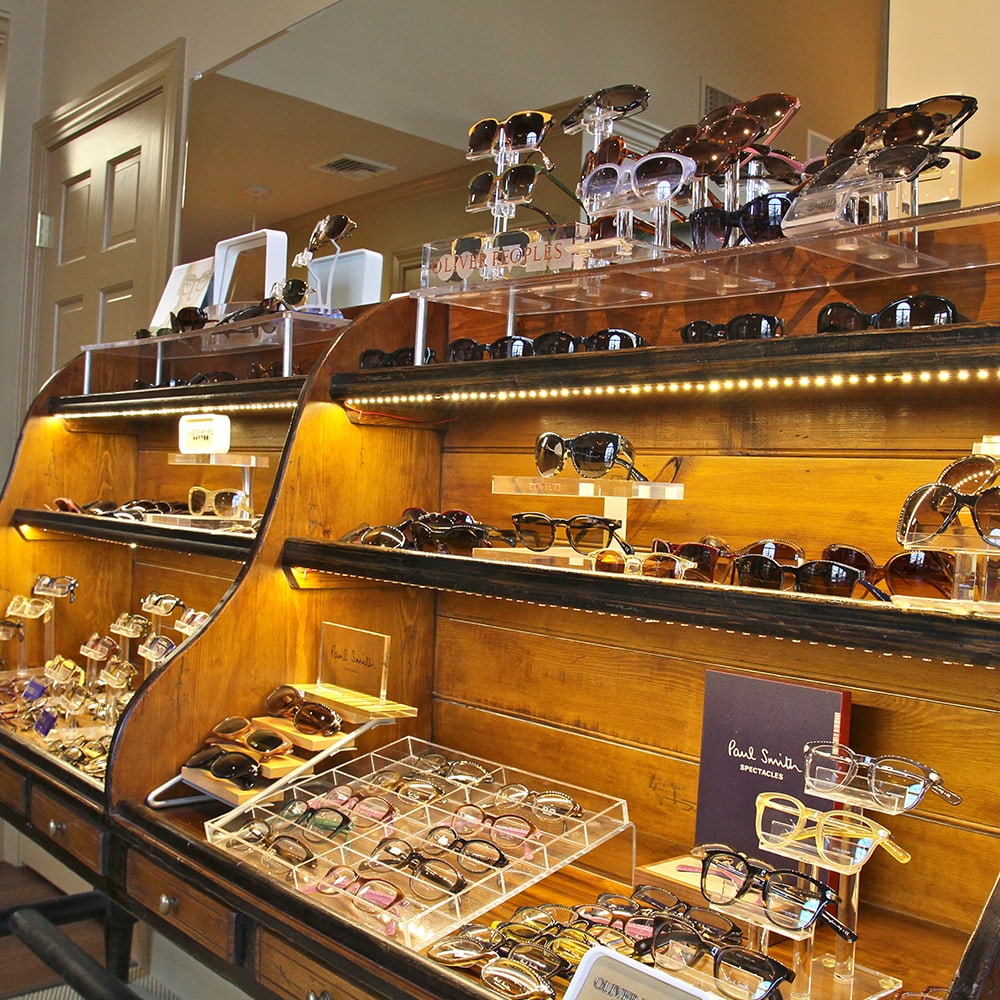
At Weston Optical, our experienced opticians take a personalized approach to helping you find lenses that suit both your prescription and your style. Visit our boutique to explore premium frame and lens combinations, compare your options in person, and discover eyewear that’s comfortable, flattering, and uniquely yours.